The best fence for Magic Valley wind is one with deep, well-set posts and a design that lets some air through. Chain link, ornamental metal, split rail and semi-private wood styles like shadowbox shed wind well. Solid privacy fences in wood or vinyl catch wind like a sail, so they need stronger posts, closer spacing and better hardware to last.
Material still matters for looks, upkeep and lifespan. Here’s how each option holds up to Twin Falls wind, sun, freeze and thaw, and sprinkler overspray.
Why does wind matter so much for fences here?
Wind across the Snake River Plain is a fact of life in Twin Falls, Jerome and the rest of the Magic Valley. The City of Twin Falls designs houses for a 115 mph ultimate design wind speed. A backyard fence isn’t engineered to that standard, but it tells you what kind of gusts our area is expected to see.
A 6-foot solid fence has a lot of surface area. When a strong gust hits it, all that force goes into the posts. That’s why most wind-damaged fences fail at the posts first: they lean, snap at ground level or pull loose from shallow footings. The panels usually survive if the posts hold.
How deep should fence posts be in Twin Falls?
The City of Twin Falls uses a 24-inch frost depth for footings. A common rule of thumb for fence posts is to bury about one-third of the post’s length, and in our area that should put the bottom of the post well below frost depth. For a 6-foot fence, that often means an 8-foot or longer post with roughly 30 inches or more in the ground, depending on soil and exposure.
Good post setting also helps:
- Concrete footings sized for the fence height, with the top crowned so water runs away from the post instead of pooling against it.
- Gravel at the bottom of the hole so water can drain away from the post end.
- Closer post spacing on solid fences in open, windy spots. Many installers go shorter than the standard 8 feet between posts where wind is a concern.
- Heavier posts at gates and corners, where loads are highest.
If a fence is over 7 feet, it needs a city building permit, and the city asks for post type and post depth details. Our guide to Twin Falls fence permits and height rules covers that and the other rules to check first.
Is cedar or pressure-treated wood better?
Both work here. The difference is where you use them.
- Pressure-treated pine is the usual choice for posts. For wood that goes in the ground, check the end tag or stamp for a ground-contact rating (UC4A or higher). Wood treated only for above-ground use will rot early in soil.
- Cedar is popular for pickets and rails because it looks good and resists decay. The USDA Forest Products Laboratory rates western redcedar heartwood as resistant to very resistant to decay. The lighter sapwood doesn’t have that protection, so look for boards that are mostly heartwood.
A common setup is treated or galvanized steel posts with cedar pickets. You get strong posts in the ground and better-looking boards above it. Our area has a severe weathering risk rating in the city’s design criteria, so both woods benefit from a stain with UV-blocking pigment every few years. Clear sealers alone won’t stop graying in our strong high-desert sun.
How does vinyl hold up to wind and cold?
Vinyl doesn’t rot or need paint, and it looks clean for years. The catch is that solid vinyl privacy panels catch a lot of wind, and the hollow posts rely on what’s inside them for strength.
- Ask whether the posts will be reinforced with steel or filled with concrete in windy spots.
- Ask about aluminum stiffeners in the bottom rails, which help keep panels from sagging or popping out.
- Choose a thicker, better-quality vinyl. Cheaper vinyl is more likely to crack from impacts, especially in cold weather.
What about chain link, metal and split rail?
Chain link is one of the best performers in wind because air goes right through it. Privacy slats change that: once you add slats, the fence acts more like a solid wall and needs heavier posts to handle the extra load. Galvanized chain link is the lowest-cost option. Vinyl-coated (usually black or green) lasts longer and looks better.
Ornamental steel and aluminum let almost all wind pass through. Steel is stronger and heavier, but it can rust where the coating is scratched or where sprinklers hit it every day. Aluminum doesn’t rust, which makes it a good match for yards with lots of irrigation.
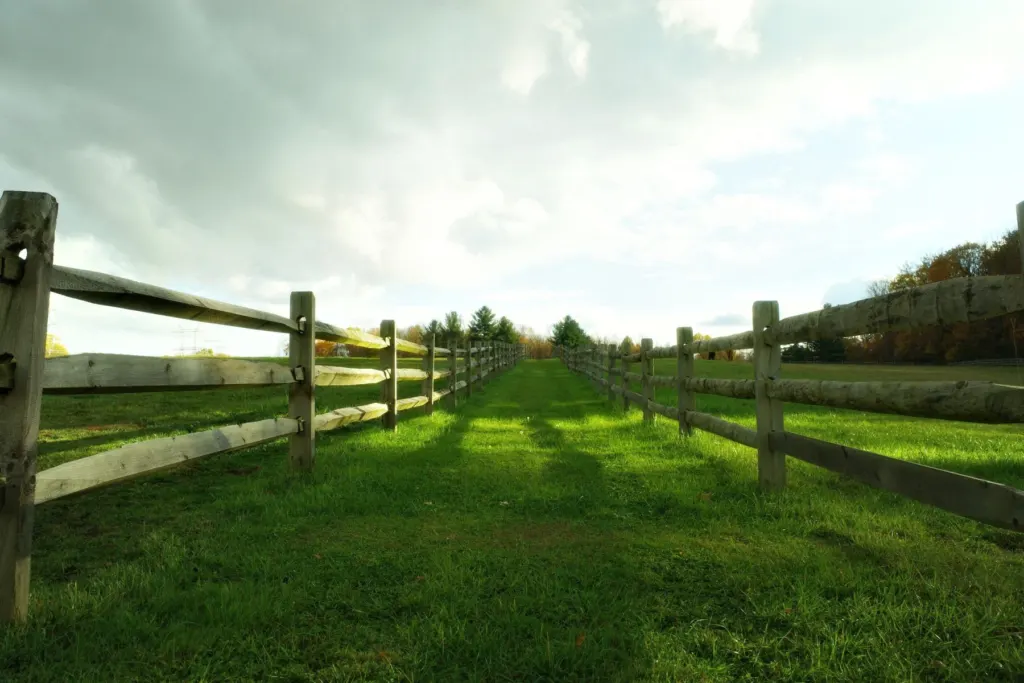
Split rail and ranch fencing barely notice wind. They work well for acreage around Filer, Buhl and Kimberly, for marking lines and for keeping livestock in. Add welded wire mesh if you need to keep dogs in.
Which fence styles let wind through?
If you want privacy but also want your fence to last in the wind, look at styles with small gaps:
- Shadowbox or board-on-board: Boards alternate on each side of the rails. It looks solid from most angles but lets air through.
- Spaced pickets: Even a small gap between boards reduces wind load.
- Louvered or horizontal slat designs: Angled or spaced slats block views while letting wind pass.
How do I keep a gate from sagging or slamming?
Gates take the most abuse in the wind. A good gate setup includes:
- A heavier gate post set deeper than line posts.
- Heavy-duty hinges rated for the gate’s weight and width.
- A diagonal brace or anti-sag kit on wood gates.
- A latch that holds when wind pushes on the gate, and a drop rod on double gates so the inactive side stays planted.
- A gate stop so wind can’t swing the gate past its frame and bend the hinges.
How do fence materials compare?
Lifespans below are general industry estimates from fence suppliers and installers, not guarantees. Actual life depends on install quality, post setting, sprinkler exposure and upkeep. Cost is relative and varies with height, length, gates and site conditions.
| Material | Typical lifespan | Wind performance | Maintenance | Relative cost |
|---|---|---|---|---|
| Pressure-treated pine | About 10 to 20 years | Fair as solid privacy; good with gaps | Stain every few years; check for rot at ground line | $$ |
| Cedar (pickets and rails) | About 15 to 25 years with care | Fair as solid privacy; good with gaps | Stain to slow graying; replace boards as needed | $$ to $$$ |
| Vinyl privacy | About 20 to 30 years | Fair; needs reinforced posts in open areas | Wash off dirt and mineral spots | $$$ |
| Chain link (galvanized) | About 15 to 20 years | Excellent without slats; fair with slats | Very low | $ |
| Chain link (vinyl-coated) | About 25 to 30 years | Excellent without slats; fair with slats | Very low | $ to $$ |
| Ornamental aluminum | About 30 years or more | Excellent | Very low; no rust | $$$ |
| Ornamental steel | Decades if the coating is maintained | Excellent | Touch up chips to prevent rust | $$$$ |
| Split rail or ranch | Varies with wood and post treatment | Excellent | Low; replace rails as needed | $ |
Which fence is right for my yard?
Here’s a simple way to narrow it down:
- Privacy in an open, windy spot: Shadowbox wood with steel or heavy treated posts, or reinforced vinyl.
- Keeping pets or kids in on a budget: Chain link, with vinyl coating if you want it to blend in.
- A front yard or view lot: Ornamental aluminum or steel.
- Acreage and livestock: Split rail, ranch rail or wire fencing.
- Heavy sprinkler exposure: Vinyl or aluminum, or fix the sprinklers first.
Our fencing service in Twin Falls covers wood, vinyl, chain link, ornamental metal and ranch fencing, and we plan post depth, spacing and gate hardware around your site’s exposure. Fall is a good time to build before winter wind picks up; our project calendar explains why.
How does Zircon build fences for wind?
We’re a general contractor. We look at your yard’s exposure, recommend a material and style, write it all into a clear estimate, and manage the fence crew we vet to build it that way. If you’re comparing materials, request a free estimate and ask us to price more than one option so you can see the difference. You can also read more about our fence installation process.
Common questions
What is the most wind-resistant fence?
Fences that let air through: chain link without slats, ornamental metal and split rail. For privacy, shadowbox or spaced-board wood handles wind better than solid panels.
Should fence posts be set in concrete?
In most Magic Valley yards, yes, with the top of the concrete crowned to shed water. Setting posts deep, below the city’s 24-inch frost depth, matters just as much.
Is vinyl a good fence for Twin Falls?
It can be, if the posts are reinforced and you choose a thicker, quality product. It resists rot and sprinkler water well, but solid panels catch a lot of wind.
How do I get hard water spots off my fence?
Start by aiming sprinklers away from the fence. For vinyl, a cleaner made for mineral deposits usually works. On wood, spots often fade with cleaning and a fresh coat of stain.
Get a free, written estimate
Tell us what you have in mind. We'll set up a time to look at it and send you a clear, itemized price, with one person managing the job from start to finish.