A water-wise yard in the Magic Valley uses drought-tolerant plants that handle alkaline soil, drip irrigation for beds, a smart controller, and less lawn where you don’t actually use it. Twin Falls averages only about 10 to 11 inches of precipitation a year, so almost everything green here depends on irrigation. The less water your yard needs, the better it handles hot summers and years when canal water is cut back.
Water-wise doesn’t have to mean all rock. It means putting water only where it does some good. Here’s how to plan it for local conditions.
What hardiness zone is Twin Falls in?
On the 2023 USDA Plant Hardiness Zone Map, most of Twin Falls, Jerome and Kimberly fall in zone 6b, where average winter lows reach -5 to 0°F. Some lower, warmer spots, like the Buhl area, map as zone 7a (0 to 5°F). Look up your own ZIP code on the USDA hardiness zone site, and pick plants rated for your zone or colder.
Hardiness zone is only part of the picture. We’re also at high elevation (the Twin Falls airport sits at 4,154 feet), with strong sun, drying wind, low humidity and big swings between day and night temperatures. A plant that’s “hardy to zone 6” in a wetter climate may still struggle here if it can’t handle dry air and alkaline soil.
Why is Magic Valley soil so hard on plants?
According to University of Idaho Extension, most southern Idaho soils contain free lime, with pH often between 7.5 and 8.2. Desert soils often have a concentrated layer of lime (the hard, whitish layer many people call caliche) just below the original topsoil. When building or grading exposes that layer, plants that need acidic soil struggle.
The most common sign is iron chlorosis: yellow leaves with green veins. UI Extension’s guide to controlling iron deficiency in Idaho plants notes it gets worse in cool, wet soils, which means overwatering makes it worse. Their advice is that plant selection is the best place to start.
What that means for your yard:
- Choose plants that tolerate high pH instead of fighting the soil.
- Add compost to planting beds, but don’t expect to change the pH of the whole yard.
- Break through hard lime layers when planting trees so roots and water can get down.
- Don’t overwater. Soggy soil makes chlorosis worse.
Should I water with pressurized irrigation or city water?
It depends on what your home has. Many Twin Falls neighborhoods have a pressurized irrigation system that uses canal water. The City of Twin Falls calls its water rights into the Twin Falls Canal Company, and the city says water usually comes on in the first or second week of April and the season usually ends in mid-October. Homes without it water their yards with treated city (culinary) water. The city posts a pressurized irrigation map by subdivision if you’re not sure.
A few things to know about pressurized irrigation:
- It’s not drinking water. The city warns that canal water is untreated and not safe to drink. Keep it separate from your house plumbing.
- It carries silt and debris. Drip systems on canal water need a good filter, and you’ll need to clean it during the season.
- It can be cut back. In May 2026 the city announced that canal deliveries were dropping to 1/2 inch per share, a 33% reduction from full water rights and the third curtailment in five years. The city asked residents to water on even or odd dates matching their address, and said repeat violations could be fined.
Outside the city, irrigation comes from other canal companies, subdivision systems or wells, each with its own schedule. Either way, a yard that needs less water is easier to keep alive in a short water year.
How much does drip irrigation help?
A lot, for beds, shrubs and trees. Spray sprinklers lose water to wind and evaporation, especially on hot, gusty afternoons. Drip puts water right at the roots, so less is lost and weeds between plants get less water.
Some good rules for drip in the Magic Valley:
- Keep lawn and beds on separate zones. Grass and shrubs need very different schedules.
- Group plants by water need (sometimes called hydrozoning), so thirsty plants don’t force you to overwater tough ones.
- Add emitters as trees and shrubs grow. A young tree’s roots spread well past where it was planted.
- Use drip along fence lines instead of spray. It keeps hard water spots and rot off your fence, one of the problems covered in our guide to fence materials for Magic Valley wind.
Are smart irrigation controllers worth it?
For most homes, yes. According to the EPA, replacing a standard clock timer with a WaterSense labeled controller can save an average home up to 15,000 gallons of water a year. The EPA also estimates that as much as half of residential outdoor water is wasted through overwatering.
A smart controller adjusts the schedule based on weather or soil moisture, so it waters less on cool or rainy days and more during a July heat wave. Many also make it easy to follow odd and even watering days. It only helps if it’s set up right, though: correct zone types, sprinkler types and soil settings matter.
Which plants do well in the Magic Valley with less water?
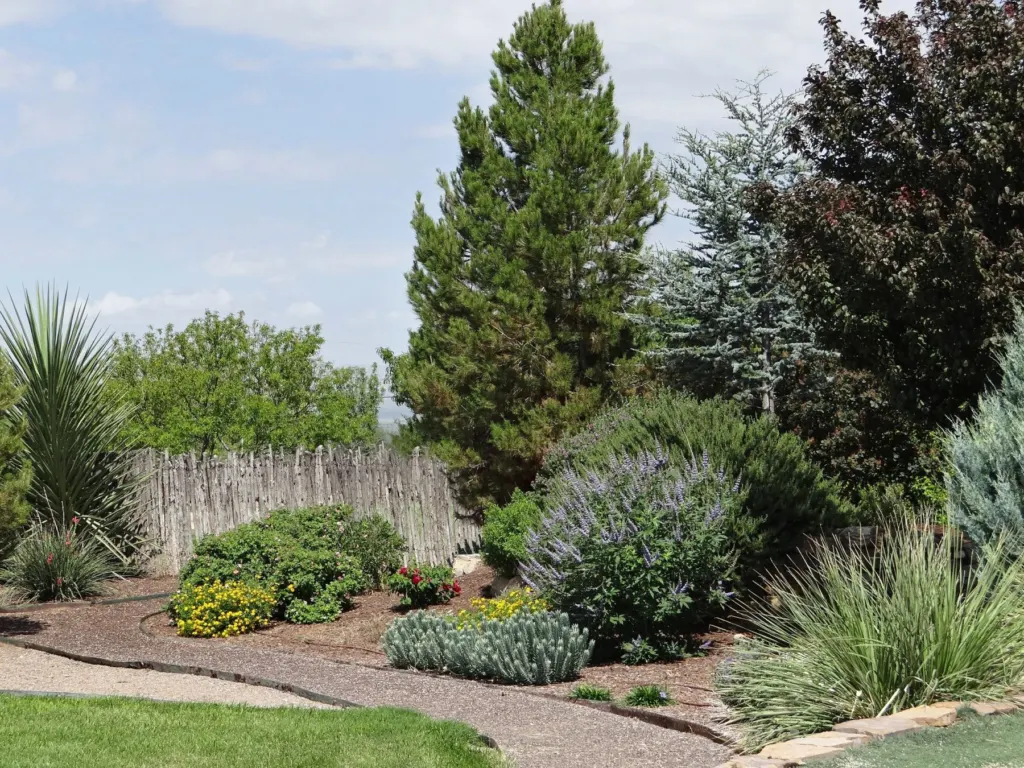
Native and well-adapted plants are the backbone of a water-wise yard. University of Idaho Extension’s native plant landscaping guide points out that natives need less water, fertilizer and pesticide than many ornamentals. A BLM Idaho guide to native landscaping for our region lists options like these:
- Western yarrow: tough, long-blooming perennial.
- Blanket flower: bright summer color on dry, sunny sites.
- Sulfur buckwheat: low, mounding and very drought tolerant.
- Wild blue flax: airy blue flowers, easy in full sun.
- Golden currant: a native shrub with spring flowers, berries and fall color, featured in the UI Extension guide.
One important point from UI Extension: even natives need regular watering for the first one to three years to get established, with less water each year after. Don’t plant and walk away. Check with the University of Idaho Extension office in Twin Falls County or a local nursery for plants that do well in your specific spot.
How much lawn should I keep?
Keep lawn where you use it: where kids play, dogs run or you set up chairs. Replace the rest. Good candidates for removal are narrow side yards, park strips, steep slopes and odd corners that are hard to water evenly without runoff.
Before you tear out grass, check your HOA rules. The UI Extension guide notes that some HOAs require a certain percentage of the yard to be lawn.
Is rock or mulch better?
Both have a place. Rock is long-lasting and doesn’t blow away in the wind, but it holds heat, which can stress plants and warm up your house on the south and west sides. Wood mulch keeps soil cooler and holds moisture, but lighter bark can blow around in our wind, so use heavier shredded mulch in exposed spots. Use landscape fabric only under rock, and keep rock and mulch a few inches away from tree trunks.
How does Zircon plan a water-wise yard?
Our landscaping service in Twin Falls covers design and installation: drip and sprinkler systems, smart controllers, turf reduction, rock, planting and hardscape. As your general contractor, we plan the zones, schedule the irrigation and landscape crews we vet and manage, and give you one written estimate for the whole project. Read more about our landscape installation, check our Magic Valley project calendar for timing, or request a free estimate.
Common questions
What growing zone is Twin Falls, Idaho?
Most of Twin Falls is zone 6b on the 2023 USDA map, with average winter lows of -5 to 0°F. Some warmer areas nearby, like Buhl, are 7a. Check your ZIP code on the USDA site.
Can I put drip irrigation on pressurized canal water?
Yes, but it needs a good filter because canal water carries silt and debris. Plan to clean the filter during the season and flush the lines each spring.
Why are my plants’ leaves turning yellow with green veins?
That’s usually iron chlorosis, which is common in alkaline southern Idaho soil. University of Idaho Extension says overwatering and cool, wet soil make it worse. Choosing tolerant plants is the best long-term fix.
Does xeriscaping mean no lawn at all?
No. Most water-wise yards keep a smaller lawn where it gets used and switch the rest to drip-watered beds, rock or mulch.
Get a free, written estimate
Tell us what you have in mind. We'll set up a time to look at it and send you a clear, itemized price, with one person managing the job from start to finish.