
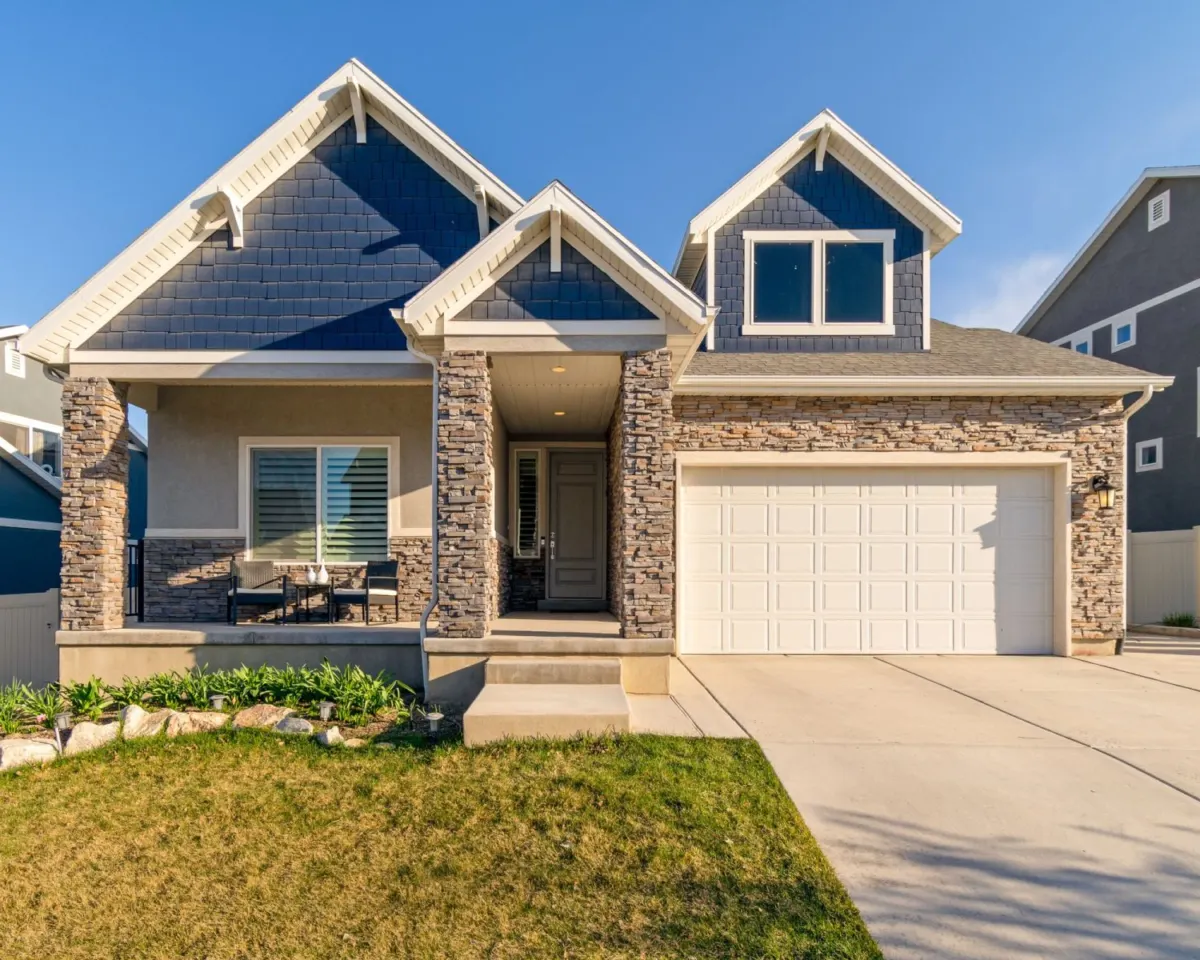
Zircon Construction is a general contractor that handles roof replacement, roof repair and the rest of the roofline for homeowners in Twin Falls and nearby towns. We inspect the roof, write up a clear price, schedule a vetted local roofing crew, and stay on the job until it passes our final walkthrough. You have one contract and one person to call.
What’s included in a roofing project
A roof is more than shingles. Water gets in where the pieces meet, so we price and manage the whole roofline together.
- Full roof replacement, including tear-off and haul-away of old roofing
- Leak and storm repairs, including missing or lifted shingles after wind
- Roof inspections with photos and a plain-language summary
- Deck inspection and replacement of soft or rotted sheathing as needed
- Underlayment, ice barrier at eaves and valleys, and drip edge
- Flashing at chimneys, walls, skylights and pipe boots
- Ridge, box or other roof vents, balanced with soffit intake
- Fascia and soffit repair or replacement
- Gutters and downspouts sized to move water away from the foundation
- Daily cleanup and magnetic sweeps for nails
Roofing materials for Magic Valley weather
The right roof here has to handle wind, hail, strong summer sun and a lot of freeze–thaw cycles. The City of Twin Falls lists a 115 mph design wind speed and rates the local weathering risk as “severe” in its residential design criteria. Here’s how the common choices compare.
Architectural asphalt shingles
Architectural (dimensional) shingles are the most common roof in the Magic Valley. They’re thicker than old three-tab shingles and hold up better to wind when installed with the right nailing pattern and starter strips. They’re usually the lowest upfront cost of the options below.
Impact-resistant (Class 4) shingles
Class 4 is the top rating under the UL 2218 impact test, where a 2-inch steel ball is dropped from 20 feet onto the shingle without cracking it through. These shingles cost more than standard architectural shingles. Some insurers offer a premium discount for them, so it’s worth asking your agent before you choose. They resist hail better, but no shingle is hail-proof.
Standing-seam metal
Standing-seam panels lock together with raised seams and hidden fasteners. There are no exposed screws to back out as the metal expands and contracts in hot days and cold nights. It sheds snow well and handles wind well, and it costs more than shingles upfront.
Exposed-fastener metal
Exposed-fastener panels (often called ag or R-panel) are screwed through the face of the panel. They cost less than standing seam and are common on shops, barns and some homes. The screws and washers need checking over time, since movement and UV can loosen or wear them.
Signs it’s time to call
- Water stains on ceilings or in the attic, or daylight through roof boards
- Missing, curled, cracked or lifted shingles, especially after a windstorm
- Lots of shingle granules in the gutters or at downspouts
- Dents or bruises on shingles, vents and gutters after hail
- Soft spots when walking the roof, or a sagging roofline
- Peeling or rotted fascia, or gutters pulling away from the house
- Ice dams or long icicles along the eaves in winter, which often point to ventilation or insulation problems
- Loose screws or rust at fasteners on a metal roof
Not sure whether to repair or replace? Our guide on signs your Magic Valley roof is done walks through it.
Worried about wind or hail damage?
Tell us what you're seeing. We'll set up an inspection and give you a written estimate.
Storm damage and insurance claims
If wind or hail damaged your roof, we can help with the claim process. We inspect the roof, take dated photos, and write up the damage and the repair scope. With your permission, we’ll meet your adjuster on site and walk the roof with them.
To be clear about what we don’t do: we don’t decide your claim, and we can’t promise what your insurer will pay. Coverage, deductibles and depreciation are between you and your insurance company. What we can do is make sure the damage is documented well and that the repair scope matches what the roof actually needs.
How a roofing project runs with Zircon
You won’t be the one calling the roofer, the gutter installer and the dumpster company. We handle the scheduling and keep you updated.
- Inspection. We look at the roof, attic and roofline, take photos and talk through your options.
- Written estimate. You get a line-by-line price and scope. If the decking turns out to be rotten, the estimate explains how that’s priced before work starts.
- Scheduling and permits. We book a vetted roofing crew and order materials. Inside Twin Falls city limits, a straight reroof doesn’t need a building permit, but structural changes do; outside the city, the county or your town’s building department sets the rules. We check and pull any permit the job needs.
- The work. We keep an eye on the job, check flashing and ventilation details, and handle any surprises with a written change order.
- Final walkthrough. We walk the finished roof and the yard with you before we call it done.
Tell us about the project
Call or send the estimate form. We'll ask a few questions and set a time to come look.
On-site visit and written estimate
We measure, talk through options, and send you an itemized price in writing. No pressure, no surprise add-ons.
We schedule and manage the crews
We book vetted local trade partners, order materials, handle permits, and check the work as it goes. You deal with one person.
Final walkthrough
We walk the finished job with you and take care of anything on the punch list before we call it done.
What affects the price of a roof
Every roof is priced after an inspection. These are the things that move the number most:
- Size and pitch. More squares and steeper roofs take more material and labor, and steep roofs need extra safety setup.
- Material. Standard architectural shingles cost less than Class 4 shingles; metal costs more still.
- Layers to tear off. Removing two layers costs more than one.
- Decking condition. Rotted or damaged sheathing has to be replaced, and you often can’t see it until the old roof is off.
- Complexity. Valleys, dormers, skylights, chimneys and walls all need flashing work.
- Roofline work. New gutters, fascia, soffit and added ventilation add to the scope.
- Access and timing. Tight lots, detached buildings and busy storm seasons can affect cost and scheduling.
For typical ranges and what drives them, read how much a roof replacement costs in Twin Falls. Your written estimate is the number that counts.
Serving Twin Falls and the Magic Valley
We manage roofing projects in Twin Falls and throughout south-central Idaho, including Kimberly, Jerome, Filer and Buhl. See the full list of towns on our service areas page.
Common questions
Do you do the roofing yourselves?
No. We’re a general contractor. We hire and schedule vetted local roofing crews, manage the job, inspect the work and stay your single point of contact. We tell you that up front so there are no surprises about who is on your roof.
Do I need a permit to replace my roof in Twin Falls?
Inside Twin Falls city limits, the city says a straight reroof doesn’t need a building permit. Structural work, like new trusses or a new roof structure, does. Other towns and the county have their own rules, so we check with the right building department for your address.
Can you roof over my existing shingles?
Sometimes a second layer is allowed, but we usually recommend a full tear-off. It lets us see and fix the decking, and it avoids trapping problems under the new roof. We’ll explain the tradeoff in your estimate.
Are Class 4 shingles worth it here?
They can be if your area sees hail or your insurer offers a discount for impact-resistant roofing. Call your insurance agent and ask. We’ll price both options side by side so you can compare.
Will you work with my insurance company?
Yes. We document the damage with photos and a written scope and can meet your adjuster on site. We can’t guarantee what your insurer approves or pays; that’s decided by your policy and your insurance company.
How long does a roof replacement take?
Many homes take one to a few working days once the crew starts. Weather, roof size, decking repairs and material delivery can change that. Your estimate includes an expected schedule, and we’ll keep you updated if it shifts.
Get a free, written estimate
Tell us what you have in mind. We'll set up a time to look at it and send you a clear, itemized price, with one person managing the job from start to finish.