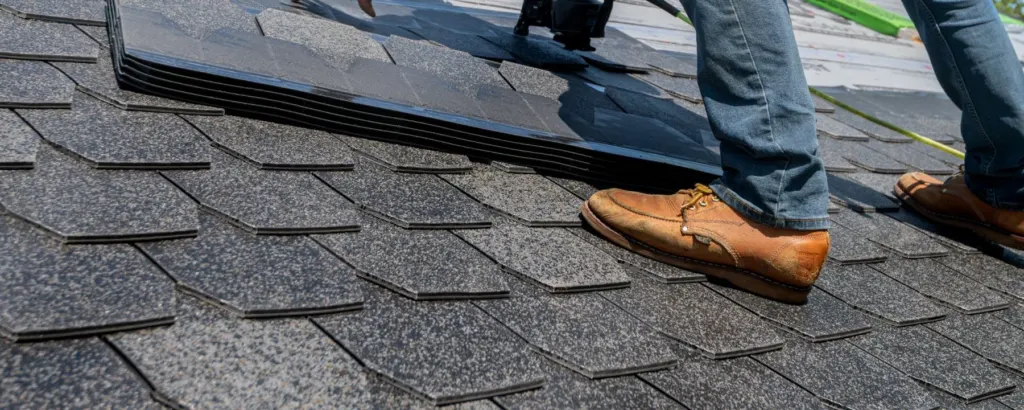
Repair your roof when the damage is limited to one area and the rest of the roof still has plenty of life: a few wind-lifted shingles, one failed pipe boot, or a small section of loose flashing. Replace it when the problems are spread across the whole roof, such as widespread granule loss, curling or cracked shingles, hail bruising on several slopes, or a roof that’s near the end of its expected life. If you’re unsure, a close-up inspection before the next windy season or winter is cheaper than chasing leaks.
Magic Valley roofs take a specific kind of beating. Wind across the Snake River Plain lifts shingle edges, summer storms can drop hail, the high-desert sun bakes asphalt, and freeze and thaw cycles work at every weak spot. Here’s how to read the signs, and when to call someone like our Twin Falls roofing team for a closer look.
How old is too old for a roof?
Age alone doesn’t condemn a roof, but it tells you how much patience to spend on repairs. InterNACHI’s life expectancy chart lists about 20 years for 3-tab asphalt shingles, about 30 for architectural shingles, and 40 to 80 for metal. The same chart notes that hot climates shorten asphalt shingle life and that hail-prone areas can see shorter lifespans too.
If you don’t know your roof’s age, check your home purchase inspection, ask the previous owner, or look for a date on paperwork in the garage or attic. A roof in the last few years of its expected life with more than one problem is usually a replacement, not a repair.
What does wind damage look like, and can it be repaired?
Wind is a constant test for Magic Valley roofs. The City of Twin Falls designs homes for 115 mph gusts, and the windier stretch of the year runs from about November into late May, according to Weather Spark’s climate summary. Signs to look for from the ground:
- Missing shingles or bare strips of black underlayment
- Shingle tabs that are flipped up, creased, or flapping in the wind
- Shingles or ridge caps lying in the yard or gutters after a storm
- Lines of lifted shingles along rakes and ridges
Usually a repair: a handful of missing or creased shingles in one area on a roof that’s otherwise in good shape. A roofer replaces them and hand-seals the tabs.
Often a replacement: shingles lifting all over the roof, repeated blow-offs after every windstorm, or shingles that crack instead of bending when a roofer lifts them. Old, brittle shingles that no longer seal down won’t stay put no matter how many times they’re patched.
How do I spot hail damage?
Hail damage is easy to miss from the ground. Check soft metals first: dents in gutters, downspouts, roof vents and your mailbox suggest the roof took hits too. On the shingles themselves, look for:
- Dark spots where granules were knocked off
- Soft, bruised spots that feel like a bruise on an apple
- Cracks or punctures in the shingle mat
- Piles of granules at downspout outlets right after a storm
Isolated hits on one slope can sometimes be repaired. Bruising across several slopes usually means replacement, and it may be an insurance claim. Call your insurer and get an inspection soon after the storm, because damage is harder to tie to a specific event later. When you replace, ask about impact-rated shingles (UL 2218 Class 4), which some insurers discount.
Why is my roof losing granules?
Granules protect the asphalt from the sun. Some shedding is normal in the first months after install. Heavy granule loss on an older roof, with bald, shiny or dark patches and grit piling up in the gutters, means the shingles are wearing out. The strong sun and hot summers in south-central Idaho speed that up, especially on south- and west-facing slopes.
Granule loss across the roof isn’t something a repair can fix. It’s one of the clearest signs the roof is near the end.
What about curling, cracking and sun damage?
Shingles that cup at the edges, claw upward in the middle, or show a web of cracks have dried out from years of heat and UV. They lose their seal and become easy targets for wind. A few curled shingles over a hot spot, like above a bathroom fan that vents into the attic, may point to a ventilation problem that can be fixed. Curling across whole slopes means replacement.
Are ice dams a roof problem or an attic problem?
Mostly an attic problem that shows up on the roof. The Department of Energy’s Building America guidance explains it: heated air leaking into the attic warms the roof deck, snow melts, and the water refreezes at the cold eaves. That ridge of ice backs water up under the shingles.
Signs include thick ice along the eaves, big icicles, and water stains on ceilings near exterior walls in winter. The fix is usually air sealing and insulation in the attic, plus good roof ventilation, not a new roof. If ice dams have already soaked the decking at the eaves, that section may need repair. When you do replace, self-adhered ice and water membrane at the eaves adds protection. The City of Twin Falls doesn’t require it, so ask whether your estimate includes it.
Can flashing leaks be fixed without a new roof?
Yes, often. Many leaks come from flashing, not shingles: the metal where the roof meets a wall, chimney, skylight or valley, and the rubber boots around plumbing vents. Cracked pipe boots are common after years of sun. Replacing a boot or resealing and reflashing one area is a normal repair. If flashing is failing in several places on an old roof, it’s usually smarter to redo it all during a replacement.
Quick checklist: repair or replace?
Go through this list. If you check two or more items in the second group, plan for a replacement.
Likely a repair
- Damage is in one area or one slope
- A few missing or lifted shingles after a single windstorm
- One leaking pipe boot, vent or small flashing section
- Roof is well under its expected life and shingles are still flexible
Likely a replacement
- Roof is near or past its expected life
- Granule loss, bald spots or grit in gutters across the roof
- Curling, cupping or cracked shingles on multiple slopes
- Hail bruising on several slopes
- Repeated blow-offs or leaks in different spots
- Sagging lines or soft spots that suggest decking damage
- Two layers of shingles already on the roof
When should I call for an inspection?
- Right after a windstorm or hailstorm, once it’s safe
- Any time you see a ceiling stain or drip, even if it stops
- In late summer or early fall, before the windy season and snow
- Before buying or selling a home
If replacement is the answer, our guide to what a roof replacement costs in Twin Falls walks through typical 2026 ranges and what a good estimate includes. Inside Twin Falls city limits, the city says reroofing doesn’t need a permit, but other towns and the county may differ, so check first.
How Zircon handles roof repairs and replacements
We’re a general contractor that works with vetted local roofing crews. We’ll look at the roof, tell you plainly whether a repair makes sense, and give you a written price either way. If you need a new roof, we manage the whole job, including gutters and fascia if they need attention, so you have one point of contact. See our roof repair and replacement service or request an inspection and estimate.
Common questions
Can I replace just part of my roof?
You can, but new shingles rarely match weathered ones, and the old section keeps aging. Partial replacement makes the most sense on a separate roof section, like a garage or porch, or when one slope took storm damage on a fairly young roof.
Is a leak always a sign I need a new roof?
No. Many leaks come from a single pipe boot, flashing joint or ice dam. Find the source before deciding. A roof with leaks in several places plus worn shingles is a different story.
How often should I have my roof checked?
A look every year or two is reasonable, plus after any major wind or hail storm. Late summer or early fall is a good time, before winter weather arrives.
Will a roof repair void my shingle warranty?
It depends on the manufacturer’s terms. Keep your warranty paperwork and ask your roofer to use compatible materials and installation methods.
Get a free, written estimate
Tell us what you have in mind. We'll set up a time to look at it and send you a clear, itemized price, with one person managing the job from start to finish.